Tiny itchy bumps on your forehead that won’t go away. Clusters along your hairline. A row of them across your chest after the gym. If your “acne” treatments aren’t doing anything, or somehow making things worse, you’re probably not dealing with regular acne at all. You’ve got fungal acne. I spent close to eight months on this before I figured out what was going on. The bumps wouldn’t pop. They itched constantly. Every salicylic acid product I tried did basically nothing, and a few of the “gentle hydrating” cleansers I switched to actually made things flare up worse, because they were feeding the yeast that causes the bumps in the first place. The cleanser you use matters more than almost anything else in your routine. Here are five worth your money on Amazon, plus a quick note on which skin type each one suits best.
What Is Fungal Acne, Really?
Fungal acne isn’t acne. The proper name is Malassezia folliculitis, and it’s a yeast overgrowth happening inside your hair follicles. That yeast lives on everyone’s skin already. It only becomes a problem when something tips the balance — usually sweat trapped under tight clothes, hot weather, or skincare loaded with ingredients the yeast loves to eat.
You can usually tell it apart from regular breakouts by looking closely. Fungal acne bumps are weirdly uniform: same size, same shape, often in tight clusters. And they itch. Real acne doesn’t, mostly. You’ll see fungal acne on the forehead, along the hairline, on the chest, shoulders, and upper back — basically anywhere you sweat. Regular acne looks messier. Different sizes, blackheads next to whiteheads, and it’s usually sore instead of itchy.
This is why your cleanser choice matters so much. Malassezia eats specific things — certain fatty acids, esters, and most plant oils. So that “nourishing” coconut-based face wash you bought? You’re feeding the problem. A good cleanser does the opposite. It doesn’t give the yeast anything to feed on, and the better ones will kill some of it while you’re at it.
What to Look for in a Fungal Acne Cleanser
A good fungal acne cleanser keeps things simple. Here’s what I check every time:
- Active antifungal ingredients like ketoconazole, zinc pyrithione, or sulfur
- Salicylic acid to exfoliate and disrupt the yeast
- No fatty acids or esters with chain lengths C11–C24 (these feed Malassezia)
- No coconut oil, lauric acid, or most plant oils
- A pH around 4.5–5.5 to keep your skin barrier happy
- Fragrance-free is usually a safer bet for irritated skin
Now, the products. I picked these because they’re widely available on Amazon, they have real reviews from actual fungal acne sufferers, and they work.
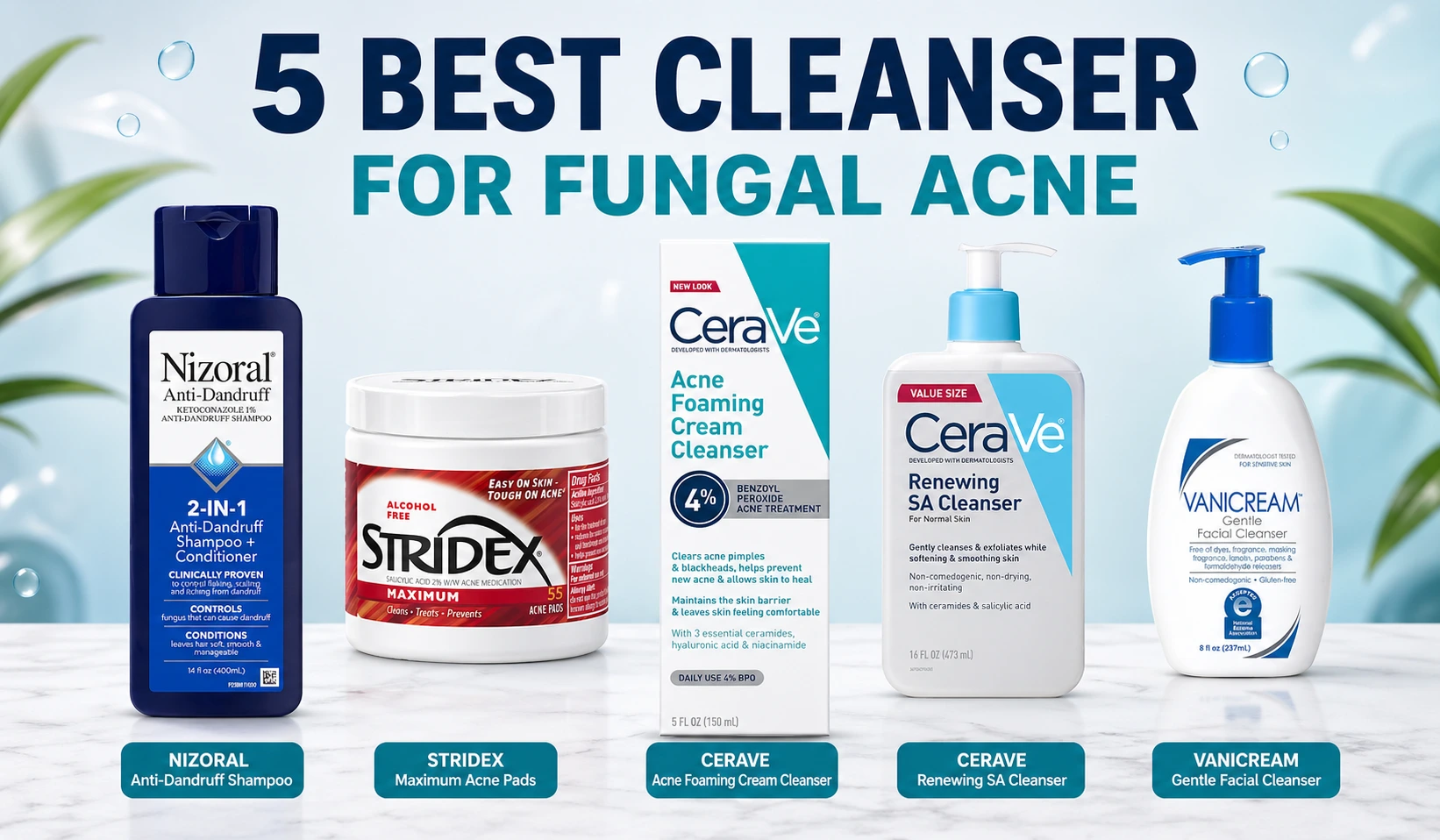
Here Best Cleanser for Fungal Acne: 5 Top Picks
1. Nizoral Anti-Dandruff Shampoo with 1% Ketoconazole
I know, using shampoo on your face sounds wrong. Stick with me. Nizoral is what dermatologists point fungal acne sufferers toward more than almost anything else, and the face-mask trick has been a quiet staple in skincare forums for over a decade. It works because of ketoconazole — a strong antifungal that wipes out the Malassezia yeast causing your breakouts.
Using it is simple. Wet your face, work a dime-sized blob into your hands, and rub it on like a mask. Wait three to five minutes, then rinse with cool water. Two or three times a week is plenty. Daily use will dry you out and make things worse, so don’t get overeager. Moisturize after with something fungal-acne-safe and you’re done.
If your skin runs sensitive, test it on your jawline for a few days before going all in. One bottle lasts about six months because you barely use any per session. Honestly? Nothing else you can grab off a drugstore shelf without a prescription comes close.
2. Vanicream Gentle Facial Cleanser
Vanicream is what I use when I’m not doing anything fancy. Twelve ingredients. No fragrance, no sulfates, no parabens, nothing on the Malassezia menu. Dermatologists have been recommending it to people with sensitive skin for years, and it carries the National Eczema Association seal.
The texture is creamy but rinses clean. It removes oil and light makeup, and my face doesn’t feel tight afterwards. I use it twice a day on the in-between days when I’m not reaching for Nizoral. It has never made my skin flare.
The reason it works for fungal acne is what’s missing from the bottle. Most “gentle” cleansers slip in some kind of coconut-derived fatty acid or plant oil that the yeast can feed on. Vanicream doesn’t bother with any of that. It just cleans your face. A bottle is cheap and lasts forever.
3. CeraVe Acne Foaming Cream Cleanser with 4% Benzoyl Peroxide
Benzoyl peroxide isn’t an antifungal, but it pulls a sneaky move on Malassezia. It releases oxygen into the pore, and the yeast suffocates. CeraVe’s formula pairs 4% BP with niacinamide, hyaluronic acid, and ceramides, which means it actually cleans without leaving your face feeling like sandpaper.
The Amazon reviews speak for themselves. Thousands of people raving, most of them after every other acne product failed. It foams well, has no scent, and the ceramides take the edge off the dryness BP usually brings.
Two things to know before you commit. Benzoyl peroxide will bleach any fabric it touches, so retire your good towels now. And ease into it — every other day for the first week, then build up. Very sensitive skin probably won’t like it. But for oily or combination skin types stuck in the fungal acne loop, it earns its spot. Throw a soothing moisturizer on after and you’re good.
4. Stridex Maximum Strength Medicated Pads (2% Salicylic Acid)
Stridex isn’t really a cleanser, but I’d be doing you a disservice not to mention it here. Each pad has 2% salicylic acid, which sloughs off dead skin, clears clogged follicles, and makes life harder for the yeast. Get the red box. That’s the Maximum Strength version, and it’s the one fungal acne sufferers actually reach for.
Use them after you wash your face, not instead. Wipe a pad over the bumpy spots, leave the residue alone, and put moisturizer on top. They’re alcohol-free, so no sting, and the textured surface adds a little gentle exfoliation as you swipe.
One jar lasts me about three months and costs less than a single drugstore serum. Heads up though: there’s menthol and fragrance in the formula, so if your skin reacts to either, patch test on your jaw first. For chest, back, and that stubborn forehead patch, these pads do a lot for the money. Most people notice the bumps calming down within two or three weeks.
5. Vanicream Z-Bar Medicated Cleansing Bar (2% Pyrithione Zinc)
Zinc pyrithione is another solid antifungal, and the Z-Bar packs 2% of it into a soap-free cleansing bar. The packaging talks about dandruff and seborrheic dermatitis, but it’s a quiet favourite in fungal acne forums for a reason.
In the shower, use it like a body wash. Rub it onto your chest, back, and shoulders, let the lather sit while you wash your hair, then rinse. For your face, work a bit of lather between your hands and apply it the way you’d use Nizoral. Leave it on for a minute or two before rinsing.
The reason I keep coming back to the Z-Bar is that it’s easier on skin than ketoconazole shampoo. You can use it more days a week without that tight, stripped feeling. Some people swap between the two, leaning on the Z-Bar for daily use and Nizoral twice a week. It’s fragrance-free, dye-free, and made by the same company behind that Vanicream cleanser earlier on the list. One bar costs about as much as a coffee and lasts weeks.
How to Build a Simple Fungal Acne Routine
Start with one antifungal product. Just one. Either Nizoral, the Z-Bar, or the CeraVe BP cleanser — whichever fits your skin — and use it two to four times a week. On the other days, wash with Vanicream. If your skin’s not too irritated, you can add Stridex pads after cleansing. Then a moisturizer that won’t feed the yeast, like CeraVe PM Lotion or Cetaphil Moisturizing Lotion.
Don’t stack five products at once. I get why people do it (panic, mostly), but it usually backfires. You strip your barrier, your skin freaks out, and now you’ve got fungal acne and irritation.
Give it time too. Two to four weeks before you’ll notice much. A couple of months for it to actually clear. There’s no shortcut I’ve found, and trust me, I looked.
When to See a Dermatologist
If six weeks have gone by and your skin still looks the same, go see a dermatologist. Sometimes those bumps aren’t fungal at all, and a quick visit clears that up. They can also prescribe oral antifungals like fluconazole or itraconazole, which knock out stubborn cases way faster than anything topical. Don’t feel weird about needing a prescription. Some cases just don’t budge without one.
Final Thoughts
The best cleanser for fungal acne depends on your skin type and how aggressive your breakouts are. For most people, the winning combo is Nizoral two or three times a week plus Vanicream daily. Add Stridex or the Z-Bar if you need more firepower.
The biggest mistake I see people make is overcomplicating things. Pick one active, stick with it, and give it time. Your skin will thank you.