6 minutes
Tinted sunscreen shopping is a nightmare. The dermatologist’s shelf has maybe ten bottles, and every one of them is the best, supposedly. Two names you’ll hear over and over: alastin hydratint vs elta md. Both have loyal fans. Both are expensive. And no, they don’t do the same thing to your face. I went through the ingredient lists, wore both for a few weeks, and pulled together what other people say once the honeymoon period wears off. Here’s the rundown, so you can pick one already.
What Each Sunscreen Actually Is
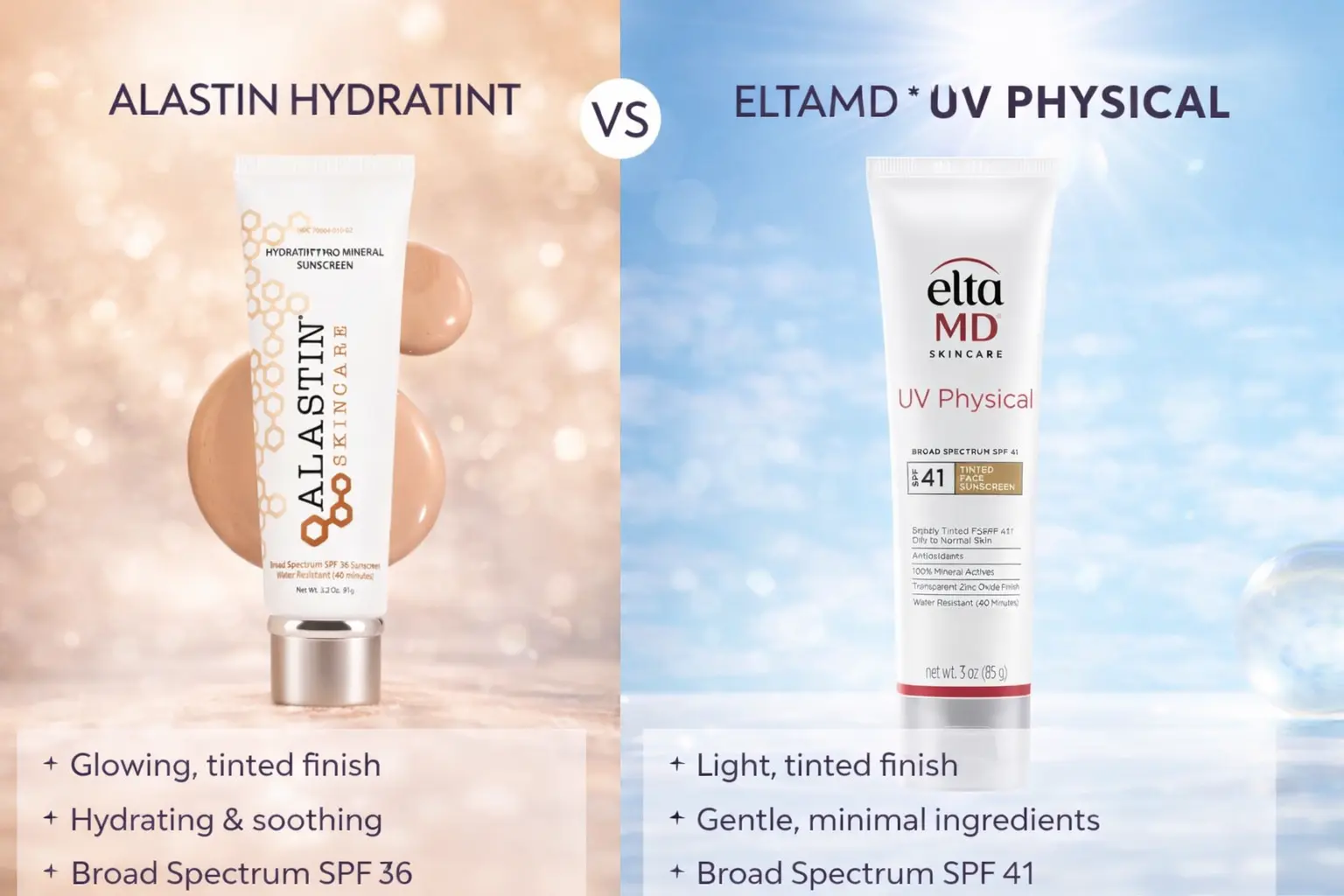
Alastin HydraTint Pro Mineral SPF 36
HydraTint is a mineral sunscreen, which means it sits on top of your skin instead of soaking in. It uses zinc oxide and titanium dioxide as the active blockers. The tint is light and adjusts to most skin tones, so you do not get that gray cast some mineral SPFs leave behind. It also has squalane for moisture and antioxidants like green tea extract. People wear it alone or under makeup. The texture is creamy, not thick, and it does not feel like you are wearing a mask. Most users say it lasts the whole workday without sliding around.
EltaMD UV Clear and UV Physical
EltaMD is not one product. The two most talked-about versions are UV Clear SPF 46 and UV Physical SPF 41. UV Clear is a hybrid (chemical and mineral) with niacinamide, hyaluronic acid, and lactic acid, which is why people with acne or rosacea love it. UV Physical is fully mineral with zinc oxide and titanium dioxide, made for sensitive skin. The tinted versions cover redness pretty well. UV Clear has the bigger cult following. Dermatologists hand it out like candy. The formula has been around for years, and the price is lower than Alastin’s.
Alastin HydraTint vs Elta MD: How They Feel On Your Skin
This is where the two split. HydraTint is lighter and more hydrating. It blends in fast, leaves a soft glow, and does not settle into fine lines around the nose or mouth. People with dry or normal skin tend to love it because their face does not feel tight by 3 p.m. EltaMD UV Clear is also lightweight, but the tint is a bit stronger. UV Physical, on the other hand, feels thicker and can pill if you rush the application. If you have oily or acne-prone skin, EltaMD UV Clear usually wins. For dry or mature skin, HydraTint is the better fit.
Sun Protection: Which One Blocks More
Pure SPF numbers favour EltaMD. UV Clear is SPF 46, UV Physical is SPF 41, and HydraTint is SPF 36. All three are above the SPF 30 minimum dermatologists recommend, so you are covered either way. But if you spend a lot of time outside, those extra points matter a little. Both brands are broad-spectrum, meaning they protect against UVA and UVB rays. Both also contain iron oxides in the tinted versions, which block visible light. That is the kind of light that makes dark spots worse, especially for darker skin tones. So protection-wise, they are close enough.
How Long Until You See Results?
Sunscreen is not a quick-fix product, and anyone who tells you otherwise is selling something. The first thing you notice is short-term: skin looks more even right after you put it on, because of the tint. That is instant. The real skin benefits take longer. Most users see less redness and a smoother tone in about 2 to 4 weeks of daily use. Studies on sunscreen with antioxidants show melanin (dark spot) reduction of around 13% after 4 weeks. For melasma or stubborn pigmentation, you are looking at 2 to 5 months. Consistency matters more than the brand here.
Ingredients Worth Knowing About
What Is Inside HydraTint
Alastin packs in extras most sunscreens skip. You get squalane (a plant-based moisturizer), green tea extract for antioxidants, and ectoin, which helps the skin handle stress like pollution and heat. There are no parabens, no fragrance, and no harsh alcohols. Some users with very sensitive eyes do report a little tingling when it gets too close, but most do not. The formula leans toward anti-aging and hydration. If your main worry is dryness, fine lines, or that crepey look around the eyes, this lineup of ingredients will probably work harder for you than EltaMD does.
What Is Inside EltaMD UV Clear
UV Clear’s star ingredient is niacinamide at 5%, which is a real concentration, not a marketing sprinkle. Niacinamide calms redness, shrinks the look of pores, and helps with oil control. There is also hyaluronic acid for surface hydration and lactic acid, a mild exfoliant. The UV Clear formula uses octinoxate as a chemical filter alongside zinc oxide, so it is not 100% mineral. Some people avoid octinoxate for environmental reasons or because they want a fully physical sunscreen. UV Physical skips chemical filters entirely. Either way, EltaMD’s ingredient list is shorter and more targeted.
Wearability Through the Day
Real-world wear is where you find out if a sunscreen is worth the money. HydraTint stays put for about 6 to 8 hours without melting in the heat. The tint does not transfer much onto collars or phones. EltaMD UV Clear lasts about the same, but on hot or humid days, some users say it gets a little shiny. UV Physical can pill if you layer it over a heavy moisturizer or rub it in too fast. Reapplication is honest work for both, especially if you are outside or sweating. Neither brand fixes the basic rule that sunscreen needs to be reapplied every 2 hours.
Price and Where to Find Them
Alastin HydraTint runs around $65 for 1.7 ounces. EltaMD UV Clear is closer to $43 for 1.7 ounces, and UV Physical is around the same price. So Alastin is the pricier pick, no way around it. Both brands sell mostly through dermatologists, medical spas, and a few trusted online retailers. Be careful on Amazon and other big marketplaces, because counterfeit sunscreens have been a problem with both brands. If the price looks too good, it probably is. Buy from a clinic or the brand’s official website to be safe and to get the real formula.
Side by Side: The Quick Verdict on Alastin HydraTint vs Elta MD
If you have dry, normal, or mature skin and want a sunscreen that doubles as a tinted moisturizer, Alastin HydraTint is the winner. It is more hydrating, the tint adjusts more naturally, and the antioxidants are better for anti-aging. If you have oily, acne-prone, or rosacea-prone skin, EltaMD UV Clear is the better pick because of the niacinamide and the lower price. EltaMD also wins if budget is your main concern. Both protect against UV. The difference is what else they do for your face beyond just blocking the sun.
My Recommendation
I would point most people toward Alastin HydraTint. The reason is simple: people use the sunscreen they actually like wearing. HydraTint feels good, looks like skin, and adds skincare benefits that go beyond UV protection. The squalane and antioxidants do real work on hydration and pollution damage. Yes, it costs more. But if you skip it because EltaMD feels too heavy or too white, the cheaper option is not saving you anything. That said, if you have acne, rosacea, or oily skin, ignore me and grab EltaMD UV Clear. It was made for your face.