6 minutes
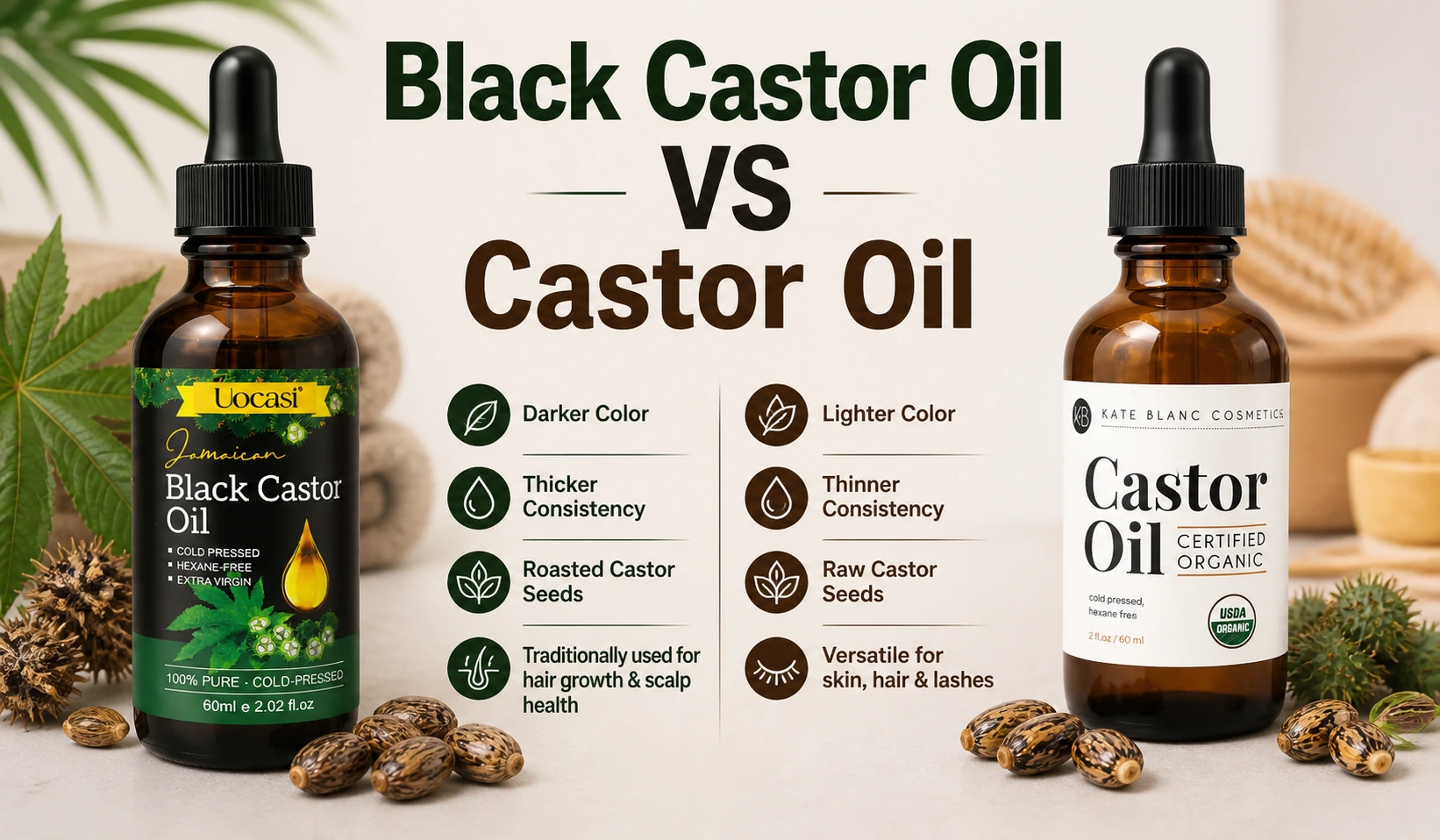
If you’ve spent five minutes on beauty TikTok or Pinterest, you’ve seen castor oil. You’ve probably also seen the black castor oil vs castor oil debate in the comments, one person swearing JBCO changed their edges, another calling it overpriced marketing. Both sides have a point.
Both oils come from the same castor bean. What changes is how they’re made, and that’s what changes the way they feel, smell, and behave on your hair and skin. So yes, there’s a real difference. No, it’s not the miracle some videos make it out to be. Here’s the honest breakdown before you spend money on either one.
Table of contents
Where Both Oils Come From
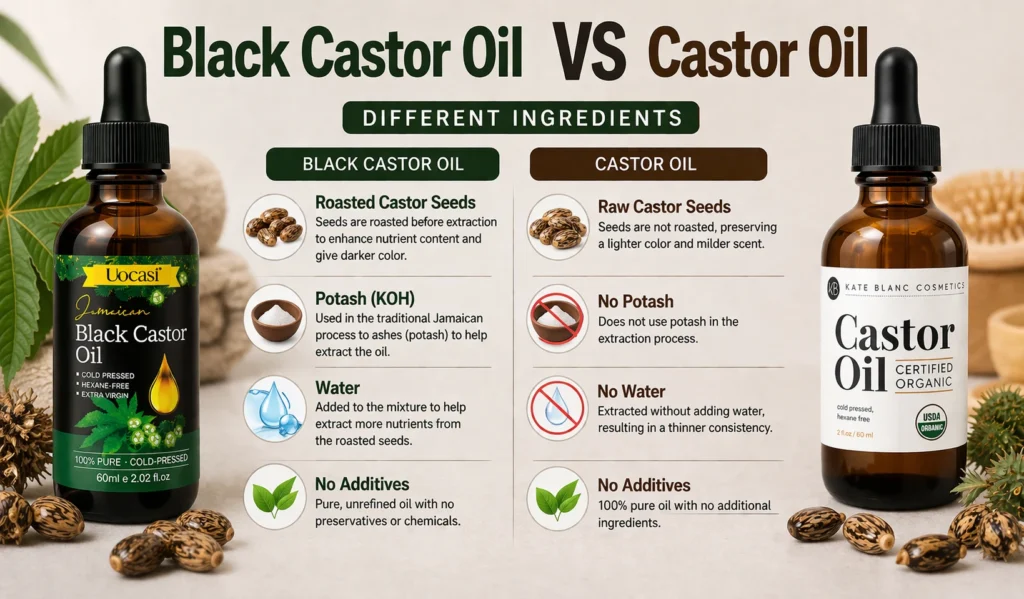
The black castor oil vs castor oil question has a simpler answer than most people expect. Both oils come from the same plant, the castor bean, or Ricinus communis. Same seed. What sets them apart is how the oil gets pulled out of the bean. Regular castor oil is cold-pressed. Raw beans, no heat, just pressure. It’s the same gentle method used for a decent bottle of olive oil. You end up with a pale yellow, almost clear oil that smells mild.
Black castor oil (most people know it as Jamaican Black Castor Oil, or JBCO) is made the old way. The beans get roasted first, ground into a paste, then boiled in water. The oil rises to the top and gets skimmed off. That roasting step is what turns it dark brown and gives it the smoky, nutty smell people either love or can’t stand.
Same bean, different process. That’s the whole difference.
The Real Differences
1. Color and Smell
When you put regular castor oil next to black castor oil, the difference hits you right away. Regular castor oil is pale, almost like cooking oil, with barely any smell. Black castor oil is dark brown, sometimes nearly black, and it carries a strong roasted scent from the way the beans are burned during processing. Some people love that smoky smell. Others can’t stand it. If your nose is picky, that’s something to think about before you buy.
2. Thickness
Black castor oil is thicker. The roasting and boiling change the texture, so it feels heavier on your hair. Regular castor oil is thick too, but it spreads more easily.
3. pH Level
This is the part most articles skip over. Black castor oil has ash from the roasted beans mixed back in, which makes it more alkaline (higher pH). Regular castor oil is closer to neutral.
Why does that matter? An alkaline oil can lift the hair cuticle a little, which helps the oil soak in deeper. That’s the main reason fans say JBCO works better for thick, coarse, or natural hair. The flip side: if your scalp is already on the alkaline side, JBCO might irritate it. Regular castor oil is gentler for sensitive skin.
4. What’s Actually Inside
Both oils are loaded with ricinoleic acid, the fatty acid that does most of the work, moisturizing, fighting inflammation, and supporting hair follicles. Regular castor oil keeps a few more natural nutrients because it doesn’t get heated. Black castor oil has extra minerals from the ash.
The honest take? The active ingredient is basically the same in both. The differences in performance come more from texture and pH than from some magic boost in nutrients.
Which One Is Better for Hair Growth?
This is the question everyone asks, and the truthful answer is: probably about the same, even though JBCO gets all the credit. Both oils work the same way. Ricinoleic acid helps with blood flow to the scalp, hair gets more nutrients, follicles stay healthier, and breakage slows down. That’s the actual science. People often see better results with JBCO because the alkalinity helps it soak in faster, and the thicker texture coats the hair shaft well. But “soaks in faster” isn’t the same as “grows hair faster.” A lot of the buzz is also down to consistency; people who use JBCO usually have a real routine, and routine is what grows hair.
Which One Should You Pick?
Here’s a simple way to decide:
Pick black castor oil if:
- You have thick, curly, coily, or natural hair
- Your edges or hairline need extra help
- You want a heavy-duty overnight scalp treatment
- You don’t mind the strong smoky smell
Pick regular castor oil if:
- You have fine or thin hair
- You have sensitive skin or a sensitive scalp
- You want something for face, lashes, brows, or nails, too
- You hate strong scents
- You want to use it in DIY beauty mixes
Plenty of people just keep both. Regular castor oil for daytime and skin care, JBCO for weekly hair treatments.
How to Use Either One
The basics are the same for both:
- Warm a small amount in your hands (a quarter-sized blob is plenty).
- Massage into your scalp for a few minutes. Don’t drown it; a little goes a long way.
- For lashes and brows, dip a clean spoolie or mascara wand in the oil and brush on before bed.
- Leave it on for at least 30 minutes, or sleep with it under a shower cap.
- Wash out with a clarifying shampoo. You may need two rinses.
Patch test first, especially with JBCO. Put a drop on the inside of your wrist, wait a day, and see how your skin reacts.
Two Product Picks Worth Buying
For Black Castor Oil: Jamaican Black Castor Oil – 100% Pure and Organic
This is the go-to for a reason. Jamaican Black Castor Oil uses the traditional Jamaican method, where castor seeds are roasted, hand-ground, then boiled to extract the oil. No fillers, no dilution. The bottle has a medium consistency and that classic ashy aroma JBCO fans look for. It’s the brand most natural hair YouTubers reach for.

For Regular Castor Oil: Kate Blanc Cosmetics Castor Oil Organic
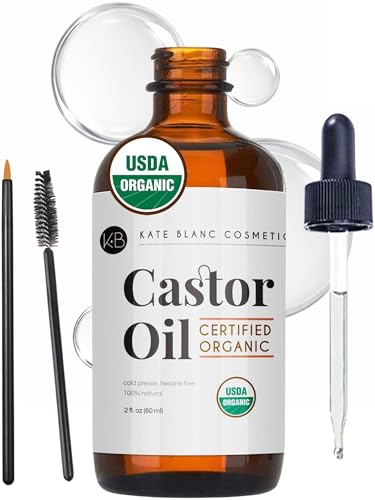
Kate Blanc Cosmetics Castor Oil Organic keeps it simple. One ingredient, cold-pressed, hexane-free, USDA organic, and packed in a glass bottle (which actually matters, as plastic can leach into oils over time). It’s a top-rated pick on Amazon and works for everything: hair, lashes, brows, skin, and castor oil packs.
A Few Things to Watch Out For
Castor oil isn’t a miracle. A few real-world warnings:
- It stains. Bedsheets, pillowcases, towels, wear an old shirt and use a dark towel.
- Less is more. Too much oil leads to buildup, clogged pores, and greasy hair.
- Don’t use it on cracked skin unless you’re sure it’s clean and pure. Cheap castor oil can contain hexane (a solvent). Stick with cold-pressed and hexane-free labels.
- Hair growth takes months. If you don’t see anything in two weeks, that’s normal. Real change shows up around the 8- to 12-week mark.
The Bottom Line
In the black castor oil vs castor oil debate, you’re really comparing siblings. Same family, totally different personalities. Regular castor oil is the easygoing one. Lighter texture, mild smell, works on skin, lashes, brows, and fine hair without much fuss. Black castor oil is heavier and more intense, curly and natural hair communities have leaned on it for generations, and that’s not just hype.
Don’t pick based on whoever’s loudest on TikTok this week. Pick based on your hair type and what your scalp can actually tolerate. If you can afford both, get both. I do.